
Dry Needling vs Acupuncture: A Physiotherapist Explains the Difference
 by
Both treatments use very thin needles, so it is no surprise that patients ask us the same question again and again: is this not just acupuncture? The honest answer is that they look similar but differ in theory, goals and training. This guide explains dry needling vs acupuncture in plain language, so you can understand what each does, what the evidence says, and which approach fits your pain. It is written by Dr. Khushbu Singh (PT), a physiotherapist trained in dry needling at Corefit Physiocare, Indirapuram.
What Is Dry Needling?
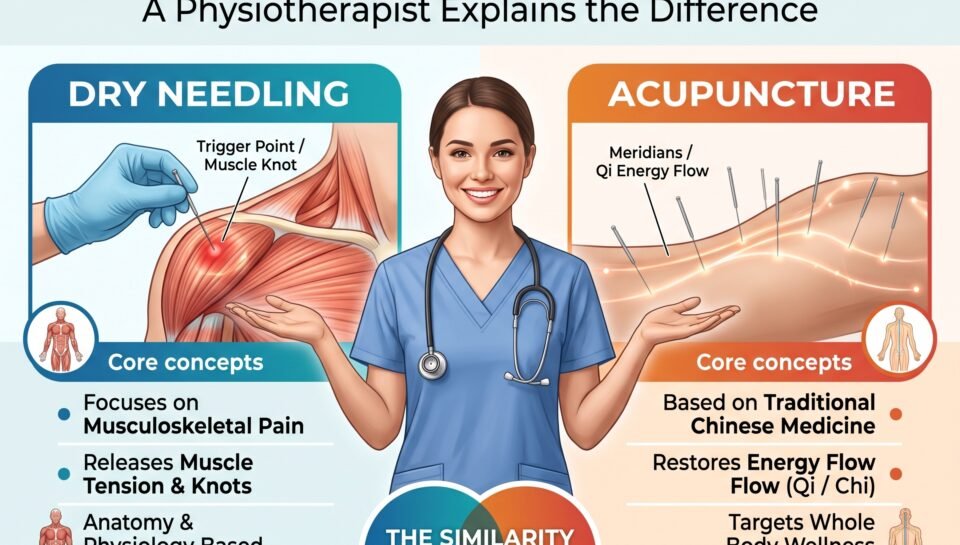
Dry needling is a technique used by trained physiotherapists to treat muscle pain and stiffness. A thin, sterile needle is placed into a tight, sensitive spot in a muscle, often called a trigger point or “knot”. “Dry” simply means nothing is injected; the needle carries no medicine.
The aim is to relax the tight band of muscle, improve local blood flow and reduce pain so you can move better. It is based on modern anatomy and how muscles and nerves behave, and it is usually combined with exercise and manual therapy rather than used alone. Knowing how it differs is the first step in weighing dry needling vs acupuncture.
What Is Acupuncture and How Does It Work?
Acupuncture comes from traditional Chinese medicine and has been practised for centuries. Needles are placed at specific points along pathways called meridians, with the traditional aim of balancing the body’s energy, known as “qi”. It is used for a wide range of complaints, not just pain.
Modern research suggests acupuncture may influence nerve signals and the body’s natural pain-relieving chemicals, although scientists still debate exactly how it works. Practitioners of acupuncture follow their own training and framework. Seeing how each one works makes the dry needling vs acupuncture comparison much clearer.
Dry Needling vs Acupuncture: The Key Differences
| Informantion | Dry needling | Acupuncture |
| Origin | Modern physiotherapy and anatomy | Traditional Chinese medicine |
| Theory | Muscle trigger points and nerve response | Meridians and balance of “qi” |
| Needle placement | Directly into tight muscle knots | Specific points along meridians |
| Main goal | Reduce muscle pain, restore movement | Wide range of symptoms and overall balance |
| Who performs it | Trained physiotherapists | Trained acupuncture practitioners |
| Usually combined with | Exercise and manual therapy | Other traditional therapies |
The needles can look identical. What differs is the reasoning behind where they go, what the practitioner is trying to achieve, and the professional background of the person using them.
What Conditions Does Dry Needling Treat Best?
Dry needling is most often used for pain linked to tight muscles, including:
- Neck, shoulder and upper back pain
- Lower back and gluteal muscle pain
- Tension-type headaches linked to neck muscles
- Tennis elbow, shoulder and hip pain
- Muscle tightness in athletes after training or injury
Research suggests it can reduce muscle pain in the short term, especially when combined with exercise. Evidence for long-term benefit is more limited, which is why we never use it as a stand-alone cure. This is a key point in the dry needling vs acupuncture discussion: each has a role, and neither is a magic fix.
Dry Needling vs Acupuncture: Which Should You Choose?
If your problem is a tight, painful muscle or a movement limitation, dry needling delivered within a physiotherapy plan is usually the more direct option. If you are interested in a traditional approach for broader concerns, or you prefer that framework, acupuncture with a qualified practitioner may suit you better.
Some patients try one and then the other. The most important factors are the practitioner’s qualifications, a proper assessment before treatment, and honest expectations. Whichever you pick, avoid anyone who promises a guaranteed cure.
Is Dry Needling Painful? What to Expect in a Session
Most people feel a brief pinch or a deep, dull ache, sometimes with a quick muscle twitch. That twitch is normal and is part of why the technique works. A typical visit includes:
- An assessment of your pain, movement and medical history
- Identifying the trigger points to treat
- Needle placement with sterile, single-use needles
- Gentle movement or stretching afterwards
Mild soreness, tiredness or small bruises for a day or two are common. Serious complications are rare when treatment is given by a trained clinician.
Is Dry Needling Safe? Who Should Avoid It?
Dry needling is generally considered safe in trained hands, but it is not right for everyone. Tell your physiotherapist if you take blood thinners, have a bleeding disorder, are pregnant, have an infection or skin problem at the site, have a metal allergy, or are very afraid of needles. In some cases we will choose a different treatment instead. Safety questions are a big part of the dry needling vs acupuncture decision, so ask any practitioner about their training, hygiene practices and what happens if you feel unwell during treatment.
How Many Dry Needling Sessions Will You Need?
There is no single number. Some patients feel a clear change after one or two sessions, while longer-standing problems often need several visits plus an exercise programme. Your physiotherapist will review your response after each session and adjust the plan.
Dry Needling at Corefit Physiocare, Indirapuram
Patients often ask us about dry needling vs acupuncture before booking. At Corefit Physiocare, Plot No. 340, Shakti Khand 4, Indirapuram, dry needling is offered by a trained physiotherapist as part of a complete plan. You can read more about dry needling in Indirapuram on our service page. Depending on your assessment, your plan may also include manual therapy, Tecar therapy and a home exercise routine.
Frequently Asked Questions
Which is better for pain, dry needling vs acupuncture?
Neither is better for everyone. Dry needling is usually more direct for tight-muscle pain, while acupuncture may suit broader concerns or a preference for a traditional approach. A proper assessment helps you decide.
Is dry needling the same as acupuncture?
No. The needles are similar, but dry needling targets muscle trigger points within physiotherapy, while acupuncture follows traditional meridian-based principles.
Does dry needling hurt?
Most people feel a brief pinch or a dull ache. Soreness afterwards is common and usually settles within a day or two.
How quickly does dry needling work?
Some people notice easier movement soon after a session, while others need several visits. Results vary from person to person.
Can dry needling help with lower back pain?
It can help when tight muscles are part of the problem. It works best alongside exercise, as explained in our lower back pain guide.
How much does dry needling cost?
The cost depends on the treatment plan and number of sessions, so please ask our team for a quote before you book.
Book a Consultation
Not sure whether needle therapy is right for you? Our team will assess your pain first and explain your options honestly. Please book a consultation or contact us directly.
📞 Call: +91-9037583758
💬 WhatsApp: Message us
📍 Clinic: Plot No. 340, Shakti Khand 4, Indirapuram, Ghaziabad, UP 201014
Also read: Joint Pain in Winter | Corefit Physiocare Indirapuram: Our 2026 Story