Groin pain is a common issue among athletes, fitness enthusiasts, and even individuals with physically demanding lifestyles. However, many people struggle to understand whether their discomfort is caused by a sports hernia or a groin strain. Although these conditions may feel similar initially, they are different injuries that require different approaches to recovery and rehabilitation. Misdiagnosis can delay healing and increase the risk of long-term pain or recurring injuries.
In this article, we explore the unique recovery paths for both injuries and detail how CoreFit Physiocare’s specialized physiotherapy protocols can help you safely regain mobility and return to peak performance.
What is a Sports Hernia?
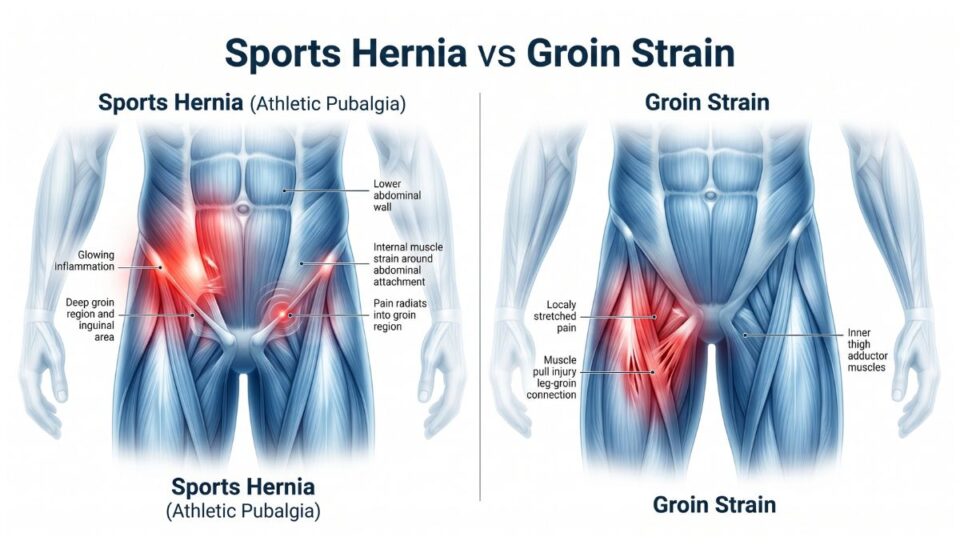
A sports hernia, also known as athletic pubalgia, is a painful soft tissue injury that affects the lower abdomen or groin area. Unlike a traditional hernia, a sports hernia does not create a visible bulge. Instead, it occurs when muscles, tendons, or ligaments in the lower abdominal wall become weak or torn due to repetitive twisting, sudden directional changes, or intense physical activity.
This condition is commonly seen in football players, cricketers, runners, hockey players, and gym-goers who perform explosive movements regularly. Sports hernia pain often develops gradually and worsens during physical activity.
Symptoms of a Sports Hernia
Patients with sports hernia may experience:
Sharp or burning pain in the lower abdomen or groin
Pain during sprinting, twisting, or kicking
Discomfort while coughing or sneezing
Weakness in the core muscles
Pain that improves with rest but returns during activity
Difficulty performing sports movements
Causes and Risk Factors
Several factors can contribute to the development of a sports hernia, including:
Weak core muscles
Poor warm-up routine
Sudden twisting movements
Overtraining
Muscle imbalance
Tight hip flexors and groin muscles
Poor exercise technique
Pain Location in Sports Hernia
The pain is usually located deep in the lower abdomen or near the pubic bone. Some patients may also feel discomfort radiating toward the inner thigh or testicular area.
What is a Groin Strain?
A groin strain is a muscle injury that occurs when one of the inner thigh muscles, commonly called the adductor muscles, becomes overstretched or torn. This injury usually happens during sudden acceleration, jumping, kicking, or overstretching movements.
Groin strains are one of the most common sports-related muscle injuries and can affect both professional athletes and active individuals.
Groin strains are generally categorized into three grades:
Mild strain: Minor muscle stretching with slight discomfort
Moderate strain: Partial muscle tear with pain and reduced movement
Severe strain: Complete muscle tear causing significant pain and weakness .
Symptoms Patients Commonly Notice
Patients suffering from groin strain may experience:
Sudden pain in the inner thigh
Muscle tightness
Swelling or bruising
Pain while walking or running
Difficulty lifting the leg
Tenderness in the groin area
Recognizing these differences helps patients seek the correct groin injury physiotherapy program and avoid complications.
How CoreFit Physiocare’s Experienced Physiotherapists Accurately Diagnose Your Injury?
Precise Pain Location: Pinpointing exactly where the pain occurs to differentiate between a groin strain and a sports hernia.
Muscle Strength: Testing the core, adductors, and pelvic floor muscles to identify any underlying weaknesses or imbalances.
Hip Mobility: Evaluating your range of motion to see how joint stiffness might be contributing to the injury.
Gait and Movement Patterns: Observing how you walk, run, and shift weight to detect altered mechanics.
Athletic History: Reviewing your sports activity history, training volume, and past injuries to understand how the condition developed.
In some cases, MRI or ultrasound scans may be recommended to confirm the injury. Early diagnosis can improve sports hernia rehab outcomes and reduce recovery time.
Sports Hernia Physiotherapy Treatment:
Core strengthening exercises
Manual therapy
Hip mobility training
Stretching programs
Soft tissue release
Posture correction
Progressive rehabilitation exercises
Groin Strain Treatment and Rehabilitation
Proper groin strain treatment is essential for complete muscle healing and long-term recovery. Ignoring symptoms or returning to sports too early may worsen the injury.
Effective Treatment Methods
Rest and activity modification
Ice therapy
Gentle stretching
Muscle strengthening
Balance and stability exercises
Gradual return-to-sport training
Recovery Timeline
Recovery time varies depending on the severity of the injury and the consistency of rehabilitation.
Mild groin strain: 2–4 weeks
Moderate groin strain: 4–8 weeks
Sports hernia rehab: 6–12 weeks or longer
Patients who follow proper physiotherapy guidance often recover faster and return to sports with better confidence.
Simple Prevention Tips
Warm up before exercise
Strengthen core muscles
Improve flexibility
Avoid overtraining
Maintain proper exercise technique
Gradually increase training intensity
Regular physiotherapy assessments can also help identify muscle imbalances before they lead to injury.
Conclusion
Sports hernia and groin strain may appear similar, but they are different conditions that require proper diagnosis and targeted rehabilitation. Understanding the symptoms, pain location, and recovery process can help patients seek the right treatment at the right time.
If you are experiencing any symptoms or require professional guidance, contact Corefit Physiocare for proper assessment and personalized treatment.
 by
by