ACL Tear Recovery
 by
by 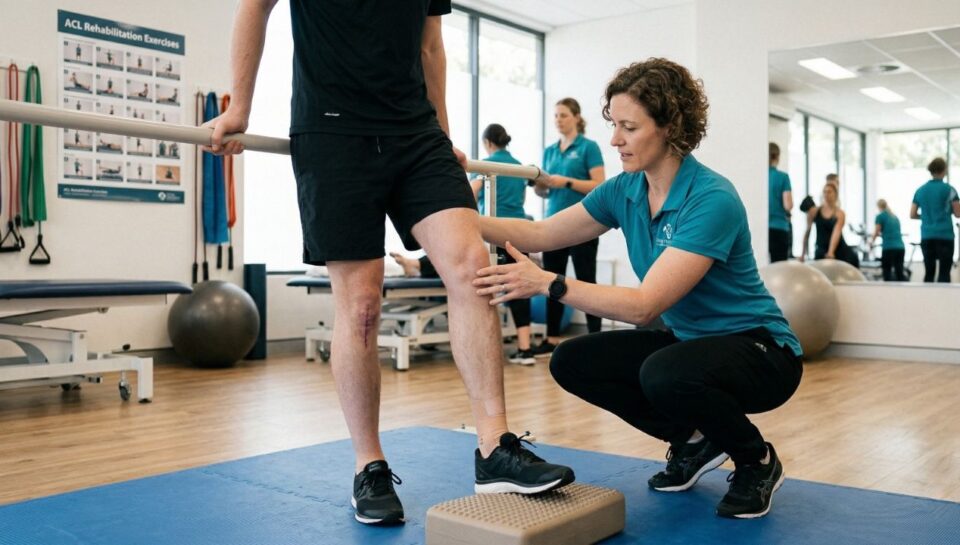
An ACL tear is one of the most feared sports injuries — and for good reason. It doesn’t just sideline you for a few weeks; a complete ACL tear can keep you off the field for 9 to 12 months or longer. Yet with the right ACL tear recovery plan, the vast majority of patients — including competitive athletes — return to full activity at or near their pre-injury level.
In this guide, our physiotherapists at Corefit Physiocare in Vaishali, Ghaziabad walk you through everything you need to know: what an ACL tear actually is, whether you need surgery, the phase-by-phase recovery timeline, the best exercises for every stage, and how to reduce your risk of re-injury. Whether you’ve just been diagnosed or you’re months into rehab, this is your complete ACL tear recovery resource.
Quick answer: ACL tear recovery typically takes 9–12 months with surgery, or 3–6 months with conservative (non-surgical) management. The single most important factor within your control is consistent, guided physiotherapy.
What Is an ACL Tear? Anatomy and Injury Explained
The anterior cruciate ligament (ACL) is one of four major ligaments in the knee. It runs diagonally through the centre of the joint, connecting the femur (thigh bone) to the tibia (shin bone) and preventing the tibia from sliding forward. It is critical for rotational stability — the kind of movement involved in pivoting, cutting, landing, and changing direction at speed.
ACL tears are classified by severity:
- Grade 1 — the ligament is stretched but structurally intact.
- Grade 2 — a partial tear, with some fibres ruptured.
- Grade 3 — a complete rupture. This is the most common type requiring surgery.
Most ACL tears are non-contact injuries — a sudden stop, pivot, or awkward landing is enough to snap the ligament. You may hear a pop at the moment of injury, followed by rapid swelling, instability, and an inability to continue activity.
Do You Need Surgery? Understanding Your ACL Treatment Options
Not all ACL tears require surgery. The decision depends on several factors: the grade of the tear, your age, your activity demands, and the presence of any other joint injuries (such as a simultaneous meniscus tear).
Conservative (Non-Surgical) Management
If you have a Grade 1 or Grade 2 tear, or if you are an older, less active patient with a Grade 3 tear, non-surgical ACL physiotherapy may be sufficient to restore knee function. This approach focuses on strengthening the muscles around the knee — particularly the quadriceps, hamstrings, and glutes — to provide the joint stability that the ligament can no longer supply.
ACL Reconstruction Surgery
For athletes who want to return to pivoting sports — football, basketball, badminton, running — ACL reconstruction surgery is almost always recommended after a Grade 3 tear. During the procedure, the torn ligament is replaced with a graft taken from the patellar tendon, hamstring tendon, or a cadaver (allograft).
The graft type influences your ACL surgery rehab timeline. Patellar tendon grafts are generally stronger and mature faster, while hamstring grafts involve less donor-site pain. Your surgeon will advise you on the best option for your anatomy and sport.
Important: Surgery does not ‘fix’ the knee on its own. The outcome of ACL reconstruction is almost entirely determined by the quality of your post-operative physiotherapy programme.
The Role of ACL Physiotherapy in a Successful Recovery
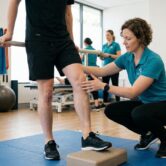
ACL physiotherapy is far more than a list of exercises. A qualified physiotherapist provides continuous clinical assessment, adjusts your programme as you progress through each phase, identifies compensatory movement patterns before they become entrenched problems, and guides you through the psychological challenges that inevitably accompany long-term injury recovery.
At Corefit Physiocare in Vaishali, Ghaziabad, our physiotherapy team uses a combination of manual therapy, progressive exercise programming, movement analysis, and patient education to support every stage of ACL tear recovery.
Evidence consistently shows that patients who complete a structured physiotherapy programme achieve:
- Significantly lower ACL re-injury rates
- Faster return to pre-injury activity levels
- Better long-term knee health and function
- Higher psychological confidence when returning to sport
A structured physiotherapy programme is the single most important variable determining long-term outcomes after ACL reconstruction — more than graft type, surgical technique, or age.
Factors That Affect Your ACL Tear Recovery Time
ACL tear recovery time varies between individuals. The following factors can either accelerate or slow your progress:
- Younger patients typically have higher tissue regeneration capacity and recover faster. However, younger athletes also have a higher re-injury rate, often due to premature return to sport. Age:
- A stronger, fitter baseline means faster early rehabilitation progress. Athletes with good quad and hamstring strength before injury often progress through phases more quickly. Pre-injury fitness:
- Patellar tendon grafts typically mature faster than hamstring grafts, though both are clinically effective. Allograft (cadaver) options carry a slightly different healing timeline. Graft type:
- This is the single most controllable factor. Patients who attend sessions consistently and complete their home exercise programme recover measurably faster and with better outcomes. Adherence to physiotherapy:
- A simultaneous meniscus tear, cartilage damage, or collateral ligament injury complicates recovery and often extends the timeline by 2–4 months. Concurrent injuries:
- Fear of re-injury is a major barrier to return to sport. Formal psychological readiness tools (ACL-RSI scale) are now part of evidence-based return-to-sport criteria. Psychological readiness:
Preventing ACL Re-Injury After Recovery
Re-injury is the most significant risk in the first two years after returning to sport, with re-rupture rates between 15–25% in young athletes returning to pivoting sports. Prevention-focused training must become a permanent part of your programme, not just a phase of rehab.
Effective ACL re-injury prevention strategies include:
- Regular neuromuscular warm-up routines (e.g., FIFA 11+ programme adapted for your sport)
- Ongoing hip, quad, and hamstring strengthening — especially Nordic hamstring curls
- Landing mechanics coaching — learning to land with slight knee flexion and not in valgus (knees caving inward)
- Education on high-risk movements specific to your sport
- Completing a formal return-to-sport programme rather than returning based on time alone
Athletes who complete a structured return-to-sport programme are significantly less likely to re-rupture than those who return based solely on time elapsed since surgery.
Frequently Asked Questions About ACL Tear Recovery
How long does ACL tear recovery take without surgery?
With conservative management, Grade 1 and Grade 2 ACL tears typically recover in 3–6 months. Grade 3 (complete) tears managed without surgery may see return to low-demand activity within 6–9 months, though pivoting sports without surgical reconstruction carry a high instability risk.
When can I start walking after ACL surgery?
Most patients begin partial weight-bearing with crutches on the day of surgery or the day after. Full independent walking typically returns between weeks 3–6, depending on graft type, surgical factors, and early rehabilitation progress.
Is ACL surgery always necessary?
No. Non-surgical management is appropriate for partial tears and for patients with low physical activity demands. However, for athletes wanting to return to cutting and pivoting sports, reconstruction surgery significantly reduces long-term instability and re-injury risk.
What happens if I skip physiotherapy after ACL surgery?
Without structured ACL physiotherapy, outcomes after reconstruction are poor. Muscle atrophy, joint stiffness, compensatory movement patterns, and elevated re-injury risk are all strongly associated with inadequate rehabilitation. The surgery creates the conditions for healing — physiotherapy is what actually rehabilitates the knee.
How do I know when I’m ready to return to sport?
Return to sport should be based on objective criteria — not just time. Commonly used benchmarks include: limb symmetry index above 90% on strength testing, successful completion of hop tests, normal gait and movement patterns, and a satisfactory score on a psychological readiness questionnaire. At Corefit Physiocare, we conduct a formal return-to-sport assessment before clearing any patient for competitive return.
Final Thoughts: Your ACL Tear Recovery Journey
Recovering from an ACL tear is a long process — but it is absolutely achievable. The path from injury to full return to sport requires patience, consistency, and a well-structured ACL tear recovery programme guided by expert physiotherapy.
The athletes who recover best are not necessarily the most talented or the youngest. They are the ones who show up to every session, do their home exercises, respect the timeline, and work closely with their physiotherapist at every phase.
If you’ve had an ACL tear and are looking for expert physiotherapy in Vaishali, Ghaziabad, the team at Corefit Physiocare is here to guide your recovery — from day one through to your return to sport. Book your assessment today.