

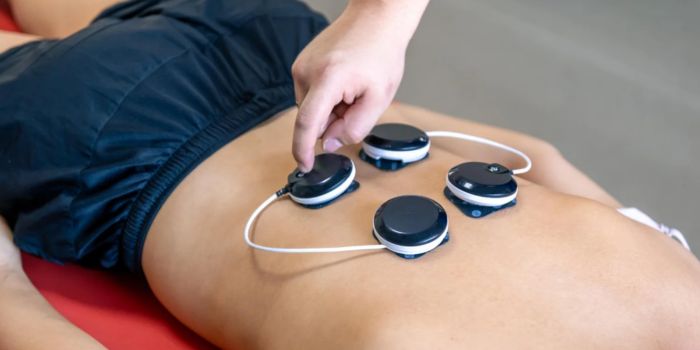
How IFT Therapy Works
The “Interferential” in IFT refers to the way two different electrical frequencies interact inside your body.
- The Mechanism: Two medium-frequency currents (usually around 4,000 Hz) are passed through the skin simultaneously.
- The Interference: Where these two currents cross, they “interfere” with one another to create a new, low-frequency therapeutic current (1–150 Hz) deep within the muscle or joint.
- Deep Penetration: Because the initial currents are medium-frequency, they encounter much less skin resistance than traditional machines. This allows the therapy to reach deep-seated injuries with significantly more comfort for the patient.
Key Clinical Benefits
IFT is a multi-purpose tool that helps the body heal in several ways:
- Superior Pain Relief: It stimulates the “Pain Gate” mechanism to block pain signals to the brain and triggers the release of endorphins (your body’s natural painkillers).
- Reduction of Swelling: The rhythmic “pumping” effect of the current improves blood circulation and lymphatic drainage, helping to flush out excess fluid and toxins.
- Muscle Relaxation: It effectively breaks the “pain-spasm” cycle by forcing tight muscles to relax and improving local blood flow.
- Accelerated Healing: By increasing cellular activity and oxygen delivery, IFT helps damaged tissues repair themselves faster.
IFT vs. TENS: What’s the Difference?
Many patients are familiar with TENS (Transcutaneous Electrical Nerve Stimulation), but IFT is a more advanced clinical option for deep-tissue issues.
| Feature | TENS Therapy | IFT Therapy |
| Depth | Superficial (Skin & Surface Nerves) | Deep (Muscles, Ligaments, & Joints) |
| Frequency | Low Frequency (1–200 Hz) | Medium Frequency (4000 Hz carrier) |
| Comfort | Can feel “prickly” or sharp | Smooth, comfortable tingling |
| Primary Use | Temporary pain masking | Healing, swelling, & deep pain |
| Portability | Small, handheld home units | Clinical-grade specialized equipment |
Conditions We Treat with IFT
Because of its deep-reaching capabilities, IFT is highly effective for:
- Spinal Health: Chronic back pain, neck stiffness, and Sciatica.
- Joint Disorders: Osteoarthritis, Rheumatoid Arthritis, and Frozen Shoulder.
- Sports Injuries: Deep muscle strains, ligament sprains, and Tendonitis.
- Nerve Issues: Carpal Tunnel Syndrome and Neuropathy.
- Recovery: Post-surgical swelling and rehabilitation after a fracture.
What to Expect During Your Session
An IFT session is safe, non-invasive, and generally very relaxing.
- Setup: Your therapist will place four adhesive pads (electrodes) around the painful area.
- Sensation: As the intensity is gradually increased, you will feel a “pins and needles” or buzzing sensation. It should feel strong but always comfortable—never painful.
- Duration: Most sessions last between 15 to 20 minutes.
- Frequency: For acute pain, daily sessions may be recommended; for chronic issues, 2–3 times per week is common.
Safety Note: IFT is generally safe for everyone, but it is not recommended for patients with pacemakers, certain heart conditions, or during pregnancy (over the abdominal/back area).