

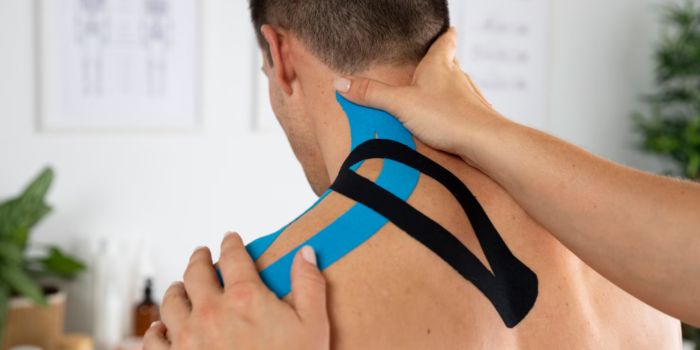
The Benefits of Professional Taping
Athletic taping serves multiple purposes depending on your specific needs and the stage of your recovery:
- Injury Prevention: Stabilizes vulnerable joints (like ankles and wrists) to prevent excessive movement or “rolling” during high-impact sports.
- Pain Management: Reduces pressure on pain receptors and offloads strained muscles or tendons.
- Neuromuscular Re-education: Improves proprioception—your brain’s awareness of where your limb is in space—which helps correct poor movement patterns.
- Swelling & Inflammation Control: Certain techniques lift the skin slightly to improve lymphatic drainage and blood flow.
- Psychological Confidence: Provides a physical “reminder” of support, allowing you to focus on your performance rather than the fear of re-injury.
Types of Taping Techniques
We utilize different types of tape based on your clinical goals:
1. Kinesiology Taping (K-Tape)
This flexible, elastic tape mimics the qualities of human skin. It is designed to move with you, providing dynamic support without restricting your range of motion. It is ideal for muscle activation, posture correction, and reducing swelling.
2. Rigid Athletic Taping (Zinc Oxide)
Non-elastic and incredibly strong, this tape is used when a joint needs to be partially or fully immobilized. It is the “gold standard” for stabilizing acute ankle sprains or protecting ligaments during high-contact sports.
3. McConnell Taping (Patellar Taping)
A specialized technique using very stiff tape to “track” or pull a joint into the correct alignment. It is most commonly used for kneecap (patellar) alignment issues to allow for pain-free squatting, running, or climbing.
Common Conditions We Treat
Taping is an effective adjunct therapy for a variety of sports-related issues:
| Joint Area | Common Conditions |
| Knee | Runner’s Knee (PFPS), Patellar Tendonitis, IT Band Syndrome |
| Ankle & Foot | Lateral Ankle Sprains, Plantar Fasciitis, Achilles Tendonitis |
| Shoulder | Rotator Cuff Strains, AC Joint Sprains, Postural Correction |
| Lower Leg | Shin Splints (MTSS), Calf Strains |
| Upper Body | Tennis/Golfer’s Elbow, Wrist Sprains, Thumb Instability |
How It Works: The Science
Taping works through mechanoreception. By applying tension to the skin, the tape sends constant sensory feedback to your nervous system. This can either “turn on” a muscle that is under-firing or “calm down” a muscle that is overactive. When used for stability, the tape acts as an external ligament, taking the stress off your internal tissues so they can heal.
Important: While many athletes learn to “self-tape,” an improper application can restrict circulation or worsen an injury. Our therapists ensure the tension and direction of the tape are clinically correct for your specific anatomy.