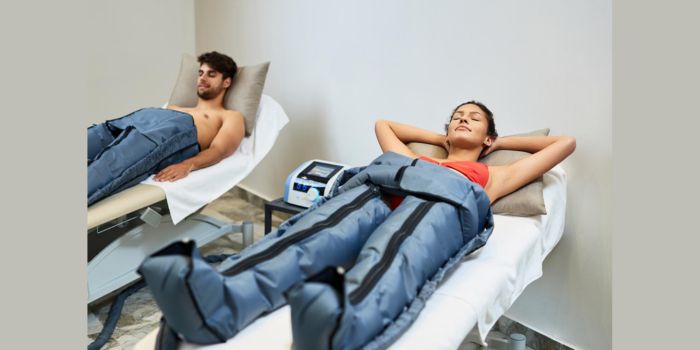
- Peripheral Edema / Swelling: Reduces fluid retention, improves venous return, decreases leg heaviness, and enhances circulation.
- Post-Workout Recovery: Helps flush metabolic waste, reduces muscle soreness (DOMS), decreases fatigue, and speeds up recovery.
- Sports Performance Enhancement: Improves blood flow, accelerates tissue repair, supports consistent training, and helps maintain peak performance.
Why Post-Fracture Rehabilitation is Essential
While a bone heals through immobilization (casts or boots), the surrounding muscles, tendons, and ligaments often become stiff and weak. Without professional guidance, you may experience:
- Joint Stiffness: Reduced range of motion in the joints near the break.
- Muscle Atrophy: Significant loss of strength due to disuse.
- Compensatory Pain: Aches in other parts of the body as they “overwork” to make up for the injury.
- Fear of Re-injury: Hesitation to put weight or pressure on the limb.
Our Approach to Recovery
We believe in a personalized, phased approach to rehabilitation. Every fracture is different, and every patient has unique goals—whether that’s walking without a limp or returning to competitive sports.
1. Comprehensive Assessment
We begin by evaluating your current range of motion, muscle strength, and functional limitations. We also review your X-rays or surgical reports to ensure our plan aligns perfectly with your doctor’s orders.
2. Pain and Swelling Management
Early-stage rehab focuses on comfort. We use manual therapy, gentle mobilization, and modalities like heat or ice to reduce lingering inflammation and discomfort.
3. Progressive Strengthening
Once the bone is stable, we introduce targeted exercises. We focus on:
- Isometric exercises to engage muscles without moving the joint.
- Resistance training to rebuild the muscle mass lost during immobilization.
- Weight-bearing progression to safely re-accustom the bone to pressure.
4. Functional Restoration
The healing process doesn’t end when the cast comes off. In many ways, that’s when the real work begins. Post-fracture rehabilitation is a specialized physical therapy program designed to help you regain the strength, flexibility, and confidence you need to return to your daily life.
Why Post-Fracture Rehabilitation is Essential
While a bone heals through immobilization (casts or boots), the surrounding muscles, tendons, and ligaments often become stiff and weak. Without professional guidance, you may experience:
Joint Stiffness: Reduced range of motion in the joints near the break.
Muscle Atrophy: Significant loss of strength due to disuse.
Compensatory Pain: Aches in other parts of the body as they “overwork” to make up for the injury.
Fear of Re-injury: Hesitation to put weight or pressure on the limb.
Our Approach to Recovery
We believe in a personalized, phased approach to rehabilitation. Every fracture is different, and every patient has unique goals—whether that’s walking without a limp or returning to competitive sports.
1. Comprehensive Assessment
We begin by evaluating your current range of motion, muscle strength, and functional limitations. We also review your X-rays or surgical reports to ensure our plan aligns perfectly with your doctor’s orders.
2. Pain and Swelling Management
Early-stage rehab focuses on comfort. We use manual therapy, gentle mobilization, and modalities like heat or ice to reduce lingering inflammation and discomfort.
3. Progressive Strengthening
Once the bone is stable, we introduce targeted exercises. We focus on:
Isometric exercises to engage muscles without moving the joint.
Resistance training to rebuild the muscle mass lost during immobilization.
Weight-bearing progression to safely re-accustom the bone to pressure.
4. Functional Restoration
The final goal is “real-world” movement. This includes balance training, gait (walking) analysis, and sport-specific or job-specific drills to ensure you are fully cleared for activity.
Our team is experienced in rehabilitating a wide range of injuries, including:
| Upper Body | Lower Body | Specialized |
| Wrist & Colles Fractures | Ankle & Foot Fractures | Stress Fractures |
| Humerus (Arm) Fractures | Hip Fractures | Post-Surgical (ORIF) Rehab |
| Clavicle (Collarbone) | Tibia/Fibula (Leg) | Spinal Compression Fractures |
Why Choose Our Clinic?
We don’t just “give you exercises.” We partner with you. Our therapists provide:
- One-on-One Attention: You’ll never feel like just another number.
- Evidence-Based Techniques: We use the latest clinical research to speed up recovery safely.
- Home Exercise Programs: Simple, effective routines you can do between sessions to stay on track.
Recovery Note: The timeline for rehabilitation varies depending on the severity of the break, but most patients see significant functional improvement within 6 to 12 weeks of starting therapy.
It helps dissolve calcium deposits, improves blood supply, and supports natural healing.
Shockwave Therapy Treatment Approach at Corefit Physiocare
Our Shockwave Therapy program includes:
Our aim is to deliver long-term relief and restore pain-free movement.
Benefits of Shockwave Therapy
Shockwave Therapy for All Age Groups
Whether you are an athlete, fitness enthusiast, working professional, or senior suffering from chronic pain, Shockwave Therapy at Corefit Physiocare helps restore mobility and improve quality of life.
Book Your Shockwave Therapy Session Today
If you’re searching for effective Shockwave Therapy in Indirapuram, Vaishali, and Vasundhara, or Ghaziabad, Corefit Physiocare is your reliable destination for advanced physiotherapy treatment.